March 2025
Navigate change in your dental practice with strategic planning, clear communication, and patient-centered transitions for lasting success.

Founder & CEO




In the last 5 years, the dental industry has seen a lot of change. New technology. New rules. Changes in patient spending patterns. Staff shortages.
And the rate of change isn’t slowing down. Practices need to be innovative to survive. Change can be especially tricky in a dental practice, where you have to balance patient expectations, standards of care, and the employee experience. But ultimately, the right changes can be the difference between a thriving practice and closing your doors.
To help smooth your transitions, here are the best change management tips we have gathered from working with thousands of practices over the past 5 years.
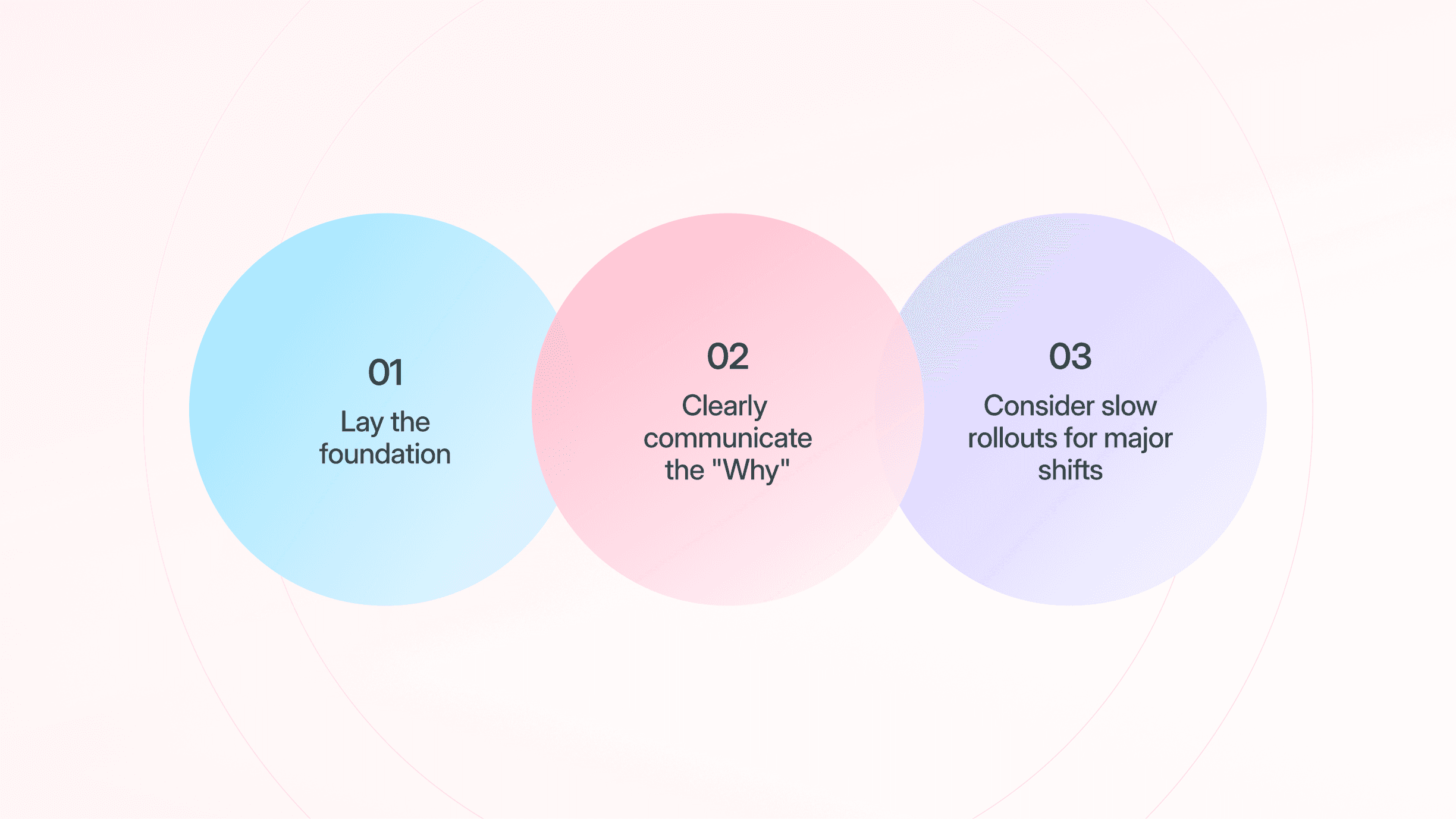
Every successful change starts with a clear plan. Take the time to sit with potential changes, big and small, and think about what it means for each area of the business.
Start by thinking of the clinical impact and the outcome of a patient's care. Does this change impact all patients, or only a subset? What about patients with existing treatment plans? Are you raising the standard of care for the future?
Once you’ve determined the clinical side of the change, you can turn to the patient experience. Does this change impact all parts of the patient experience equally, or only certain stages of their journey with your practice? Are you making the experience easier or more pleasant for patients? What are the risks to a patients’ satisfaction?
Finally, think about how this change will impact your team. It’s important to consider the big picture, of course, but perhaps even more so to think about their day-to-day workflows. Will they need to update existing processes? Will this change reduce their workload, or do you need to reallocate responsibilities to ensure they have bandwidth to implement?
With your plan in place, it’s time to communicate about the change. The more clear you can be here, the more successful changes tend to be.
Try framing the change in terms of the problem you’re addressing with the switch. State the problem as simply as you can, for example, “patients feel their insurance isn’t covering enough of their essential care.” Then, add what you’ve already tried to address the problem–and why it didn’t work: “and payment plans create debt for patients who are already burdened by cost.” Finally, add what you are implementing and why you think it will finally address the original problem: “That’s why we are creating a membership program. Patients can pay monthly to access their essential services at a lower cost.”
Implementing meaningful change starts with getting your team on the same page. Take the time to explain to your staff what’s changing (use your why statements!) and what you expect from them. This should include details about any workflow changes that will impact them directly.
Give your team some time to sit with the decision before inviting feedback. Their feedback is important, but many people’s natural inclination in the face of change is to resist–which can create unnecessary friction. Let them think about the change for a bit first, they may come around and provide more helpful feedback if they have some time to privately process it.
Many of the changes you’ll make in your practice will impact patients themselves. Whether you expect the change to affect their experience or their outcomes, it’s important to inform the patients thoughtfully. Patient communications are generally most effective in writing since the format allows them to save the communications it will benefit them–not your office. For example, if you are implementing a change at the front desk that will save your staff time, communication to patients should be about what those time savings will do for the patients themselves, like shorter wait times or less paperwork.
If the change requires some sort of action from the patients, be sure to call out that action clearly. In the above example about changes at the front desk, you could say: “Update your contact information in the patient portal to decrease your paperwork at check-in.”
Finally, if you are making a major change in your practice–like phasing out an insurance carrier or going fee-for-service–consider rolling out the change slowly. Give your staff and patients plenty of notice before you make the switch and take it incrementally, giving everyone more time to adjust before the change affects them drastically.

We're a health technology company building a platform to help underinsured Americans get the essential care they need at a reasonable price.



The Subscribili Subscription Plans are not insurance, but a licensed treatment savings subscription plan offered through our offices. Subscribers in good standing with their annual subscription fee are eligible to receive transparent, subscriber-only discounts from the normal retail fees that participating offices typically charge self-pay patients for treatment. Plan details and subscriber savings are exclusive to participating offices and may vary by location. Subscribili does not make payments directly to care providers for services rendered to plan subscribers. Subscribers are obligated to pay for all care services, but will receive a discount on services rendered by participating care providers. The plan is not a qualified health plan under the Affordable Health Act. The plan does not meet the minimum creditable coverage requirements under MGLC.111M and 956 CMR 5.00. Discount Medical Plan Organization (“DMPO”) and plan administrator: Subscribili Inc. 5900 Balcones Drive, Suite 100, Austin, TX 78731.
© 2025 Subscribili, Inc. All rights reserved.